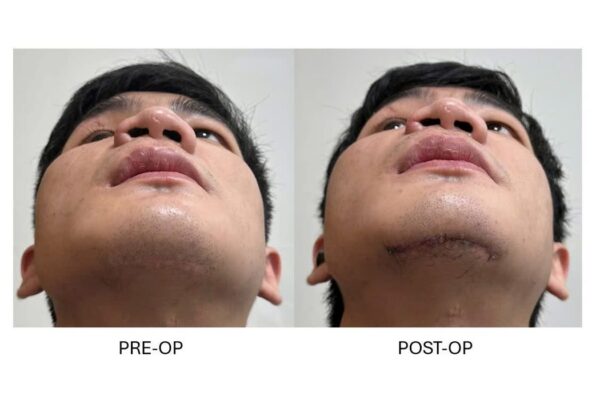
Phẫu thuật khớp thái dương hàm là gì?
Khớp thái dương hàm là khớp nối giữa xương hàm dưới và nền sọ, giữ vai trò quan trọng trong ăn nhai, nói chuyện và vận động đóng mở miệng. Khi khớp bị tổn thương nặng, dính khớp, tiêu lồi cầu, biến dạng hoặc phá huỷ cấu trúc, người bệnh có thể gặp đau kéo dài, hạn chế há miệng, lệch hàm, sai khớp cắn và bất đối xứng khuôn mặt.
Phẫu thuật khớp thái dương hàm là hướng điều trị dành cho những trường hợp mà điều trị bảo tồn hoặc các can thiệp giới hạn không còn đạt được chức năng phù hợp. Ở các ca phức tạp, điều trị có thể bao gồm tái tạo khớp hoặc thay khớp thái dương hàm toàn bộ được thiết kế riêng cho từng người bệnh.
Những trường hợp nào có thể cần thăm khám?
Thăm khám chuyên sâu thường nên được cân nhắc khi có một hoặc nhiều tình huống sau:
- Dính khớp thái dương hàm, đặc biệt khi há miệng hạn chế nặng hoặc tái phát
- Tổn thương khớp giai đoạn cuối với đau, giảm chức năng và phá huỷ cấu trúc khớp
- Tiêu lồi cầu không rõ nguyên nhân, đặc biệt khi kèm cắn hở, lùi hàm dưới hoặc thay đổi khuôn mặt tiến triển
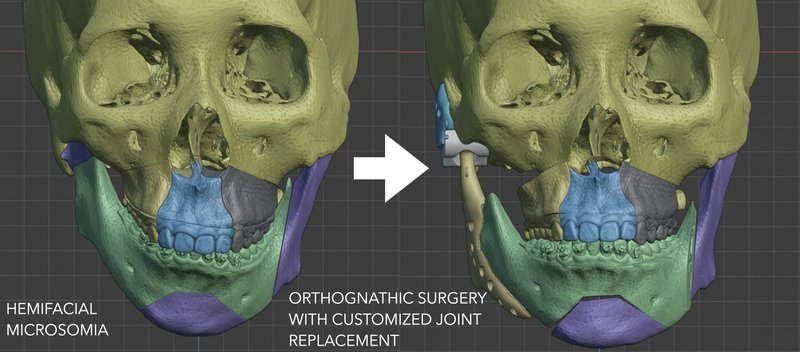
- Biến dạng sọ mặt như teo nửa mặt (hemifacial microsomia) có liên quan đến thiểu sản lồi cầu và cành cao xương hàm dưới
- Các trường hợp đã phẫu thuật khớp trước đó nhưng chức năng vẫn kém hoặc biến dạng tiếp tục tiến triển
Không phải mọi trường hợp đau khớp hay tiếng kêu khớp đều cần phẫu thuật. Chỉ định phẫu thuật chỉ được đặt ra sau khi đánh giá đầy đủ triệu chứng, hình ảnh học, chức năng vận động hàm và mục tiêu điều trị lâu dài.
Mục tiêu của điều trị
Phẫu thuật khớp thái dương hàm hướng tới nhiều mục tiêu cùng lúc:
- Giảm đau và cải thiện chức năng vận động hàm
- Phục hồi biên độ há miệng
- Tái lập cấu trúc khớp ổn định hơn
- Cải thiện khớp cắn khi khớp là nguyên nhân gây sai lệch
- Hỗ trợ cải thiện đối xứng khuôn mặt trong những trường hợp phù hợp
- Tạo nền tảng chức năng và hình thể bền vững hơn trong dài hạn
Ở nhiều người bệnh, mục tiêu điều trị không chỉ là giảm triệu chứng tại khớp mà còn là phục hồi lại sự cân bằng giữa khớp, khớp cắn và hình thể khuôn mặt.
Khớp thái dương hàm toàn bộ được thiết kế cá nhân hoá cho từng bệnh nhân
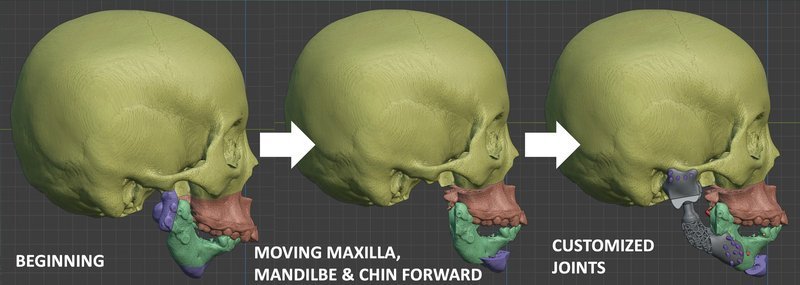
Trong những trường hợp tổn thương khớp nặng hoặc không còn khả năng bảo tồn, thay khớp thái dương hàm toàn bộ có thể là một lựa chọn tái tạo quan trọng. Điểm khác biệt của hướng điều trị hiện đại là hệ thống khớp có thể được thiết kế cá nhân hoá cho từng bệnh nhân dựa trên dữ liệu hình ảnh học và giải phẫu riêng của từng trường hợp.
Thiết kế cá thể hoá giúp:
- Phù hợp hơn với cấu trúc xương thực tế của từng người bệnh
- Hỗ trợ vị trí cố định chính xác hơn
- Tăng khả năng kiểm soát trong các ca biến dạng phức tạp
- Tạo điều kiện thuận lợi khi cần phối hợp với chỉnh hình xương hàm
Điều trị không còn chỉ là thay một khớp bị bệnh, mà là tái tạo lại tương quan giữa nền sọ, cành cao xương hàm dưới, khớp cắn và khuôn mặt.
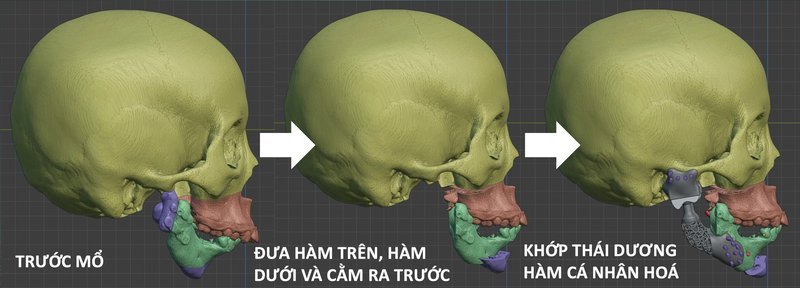
Phối hợp với chỉnh hình xương hàm trong nhiều trường hợp phức tạp
Ở một số bệnh nhân, bệnh lý khớp thái dương hàm không tồn tại đơn độc mà gắn liền với biến dạng hàm mặt. Khi đó, điều trị khớp đơn thuần thường không đủ để giải quyết toàn bộ vấn đề chức năng và hình thể.
Phẫu thuật khớp thái dương hàm có thể cần phối hợp với chỉnh hình xương hàm trong nhiều trường hợp, đặc biệt như:
- Hội chứng teo nửa mặt (hemifacial microsomia)
- Tiêu lồi cầu không rõ nguyên nhân
- Các bệnh lý cấu trúc khớp thái dương hàm gây biến dạng khuôn mặt
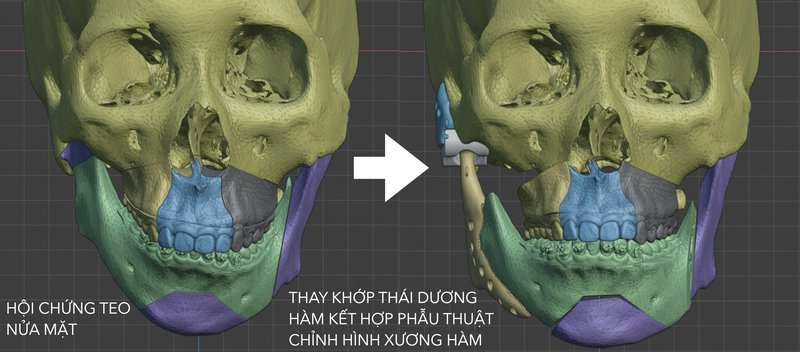
Trong các tình huống này, phẫu thuật không chỉ nhằm cải thiện há miệng hay giảm đau, mà còn hướng tới:
- Tái lập chiều cao cành cao xương hàm dưới
- Khôi phục khớp cắn ổn định hơn
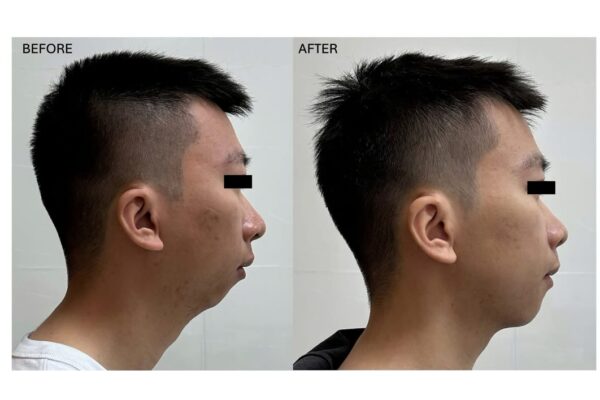
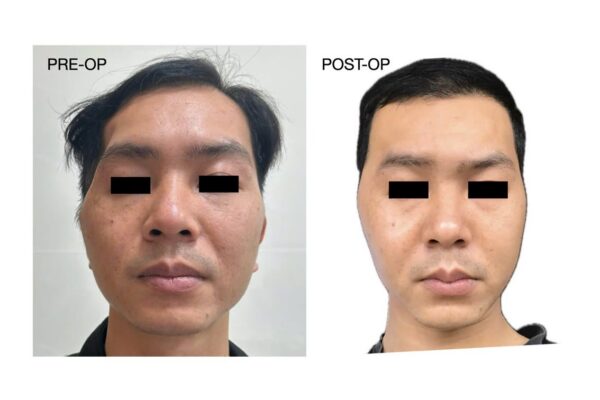
- Cải thiện đối xứng khuôn mặt và đường nét góc nghiêng
- Phục hồi đồng thời chức năng và thẩm mỹ
Quy trình đánh giá và lên kế hoạch
Những ca phẫu thuật khớp thái dương hàm phức tạp thường cần:
- Khám lâm sàng trực tiếp
- Đánh giá đau, há miệng, lệch hàm và chức năng nhai
- CT để phân tích cấu trúc xương, mức độ biến dạng và mốc giải phẫu
- MRI khi cần đánh giá thêm đĩa khớp hoặc mô mềm
- Phân tích khớp cắn và tương quan hai hàm
- Lên kế hoạch phối hợp tái tạo khớp với chỉnh hình xương hàm nếu có chỉ định
Ở các ca teo nửa mặt, tiêu lồi cầu hoặc biến dạng mặt liên quan đến khớp, việc lên kế hoạch cần nhìn toàn bộ khuôn mặt chứ không chỉ riêng khớp: vị trí hàm trên, hàm dưới, cằm, đường giữa, góc nghiêng và mô mềm.
Những băn khoăn thường gặp
Có phải đau khớp thái dương hàm là sẽ cần thay khớp?
Không. Thay khớp toàn bộ chỉ dành cho nhóm bệnh nhân chọn lọc với tổn thương cấu trúc nặng, dính khớp hoặc bệnh lý giai đoạn cuối. Phần lớn các rối loạn khớp thông thường không đi đến chỉ định này.
Khớp được thiết kế sẵn hay thiết kế riêng?
Trong định hướng điều trị này, điểm nhấn là khớp được thiết kế cá nhân hoá cho từng bệnh nhân, dựa trên dữ liệu giải phẫu thực tế thay vì áp dụng một mô hình chung.
Có thể vừa thay khớp vừa chỉnh hình xương hàm không?
Có, trong những trường hợp phù hợp. Đây là chiến lược đặc biệt quan trọng ở các bệnh nhân hội chứng teo nửa mặt, tiêu lồi cầu không rõ nguyên nhân hoặc các bệnh lý cấu trúc khớp thái dương hàm gây biến dạng khuôn mặt, khi cần đồng thời tái tạo khớp và phục hồi tương quan hàm mặt.
Khi nào nên thăm khám trực tiếp?
Một buổi thăm khám trực tiếp nên được cân nhắc khi:
- Há miệng hạn chế kéo dài hoặc tái phát
- Nghi ngờ dính khớp thái dương hàm
- Đã điều trị nhiều lần nhưng khớp vẫn đau, biến dạng hoặc chức năng kém
- Có bất đối xứng mặt, teo nửa mặt, tiêu lồi cầu hoặc biến dạng mặt liên quan đến khớp
- Muốn được đánh giá rõ vai trò của tái tạo khớp và khả năng phối hợp với chỉnh hình xương hàm
Một kế hoạch điều trị đúng luôn bắt đầu từ đánh giá đúng về loại tổn thương khớp, mức độ ảnh hưởng chức năng và mối liên quan với toàn bộ cấu trúc hàm mặt.